Growing up with two languages: my child mixes them up — is that a problem?
"Baba, kurbağa is frog!" Children growing up with two languages often mix them within a sentence, and parents worry. What does the research say, and what can you do at home?
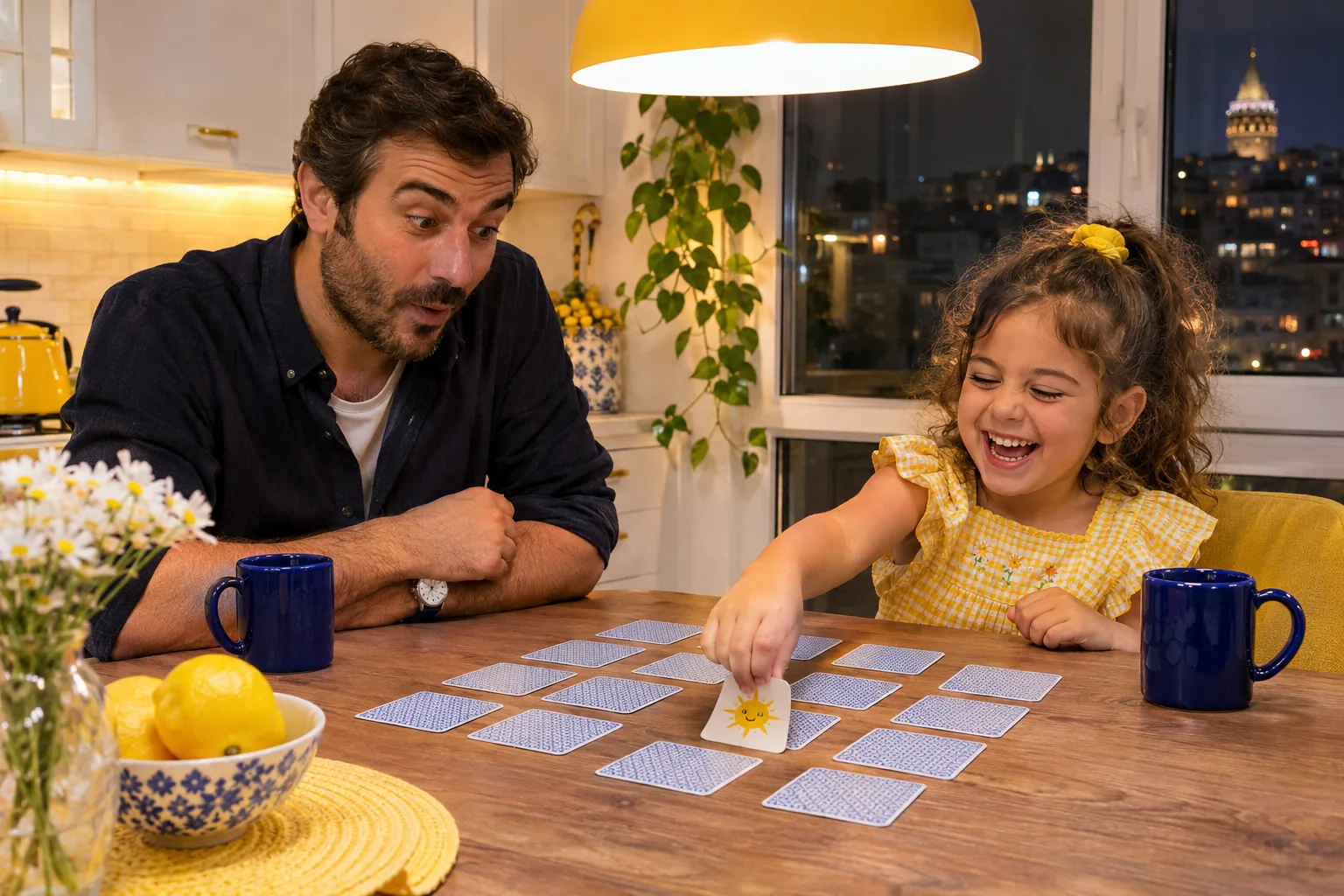
On the way home from school your child says, "Anne, I want su!" The first reaction is often worry: have two languages confused them? Is their Turkish suffering? The short answer is no. This is a completely normal stage that almost every child growing up with two languages goes through. For the long answer, read on.
Mixing languages is not confusion, it is a skill
Linguists call switching between two languages within a sentence "code-switching" or "code-mixing". Bilingual adults do it all the time; people who know both languages well use whichever word comes more easily at that moment. In young children there are a few reasons for it:
- A word exists in one language but not yet in the other. A child who learnt "frog" at school but doesn't yet use the Turkish word often fills the gap with the other language.
- A word belongs to a context. A child who hears "tidy up" every day at school may say it at home while putting toys away.
- The child knows you understand both languages. Bilingual children pay attention to which languages the person they are talking to knows, and choose their language accordingly.
Studies on early bilingualism show that children growing up with two languages can tell them apart early on and choose a language depending on who they are talking to. Mixing does not mean they "can't separate the languages".
When measuring a bilingual child's vocabulary you need to count both languages together. Looking at only one, a child can seem behind; adding both changes the picture.
"Will two languages delay speech?"
There is no strong evidence that bilingual children start talking clearly later than monolingual peers. Children say their first words and first two-word sentences at similar ages. Vocabulary in each language taken separately may be smaller than a monolingual peer's, but when concepts in both languages are counted together the gap usually closes. A speech delay is not caused by two languages; if a child is clearly behind in both languages, that is a separate matter to discuss with a specialist.
What should we do if we don't speak English at home?
This may be the question we hear most. Our answer is always the same: keep speaking Turkish at home.
- A strong first language is the foundation for a second. Concepts a child builds in their first language (colours, numbers, feelings, cause and effect) transfer easily to the second.
- Don't switch to an English you are not comfortable with. Speaking a language you are not at ease in spoils the naturalness of conversation and offers an incomplete model. Your strongest language is the language of your bond with your child.
- Listen with curiosity. When your child tries to teach you something in English, be the student: "How did you say that? Can you say it again?"
- Play with the same words as school. On our Words of the week page we publish the words used in class that week, with pronunciation you can listen to. Five minutes is enough.
- Don't correct; recast. When your child says "I goed to park", say "Oh, you went to the park!" instead of "No, it's went". The same goes for Turkish.
How do we keep the languages apart at school?
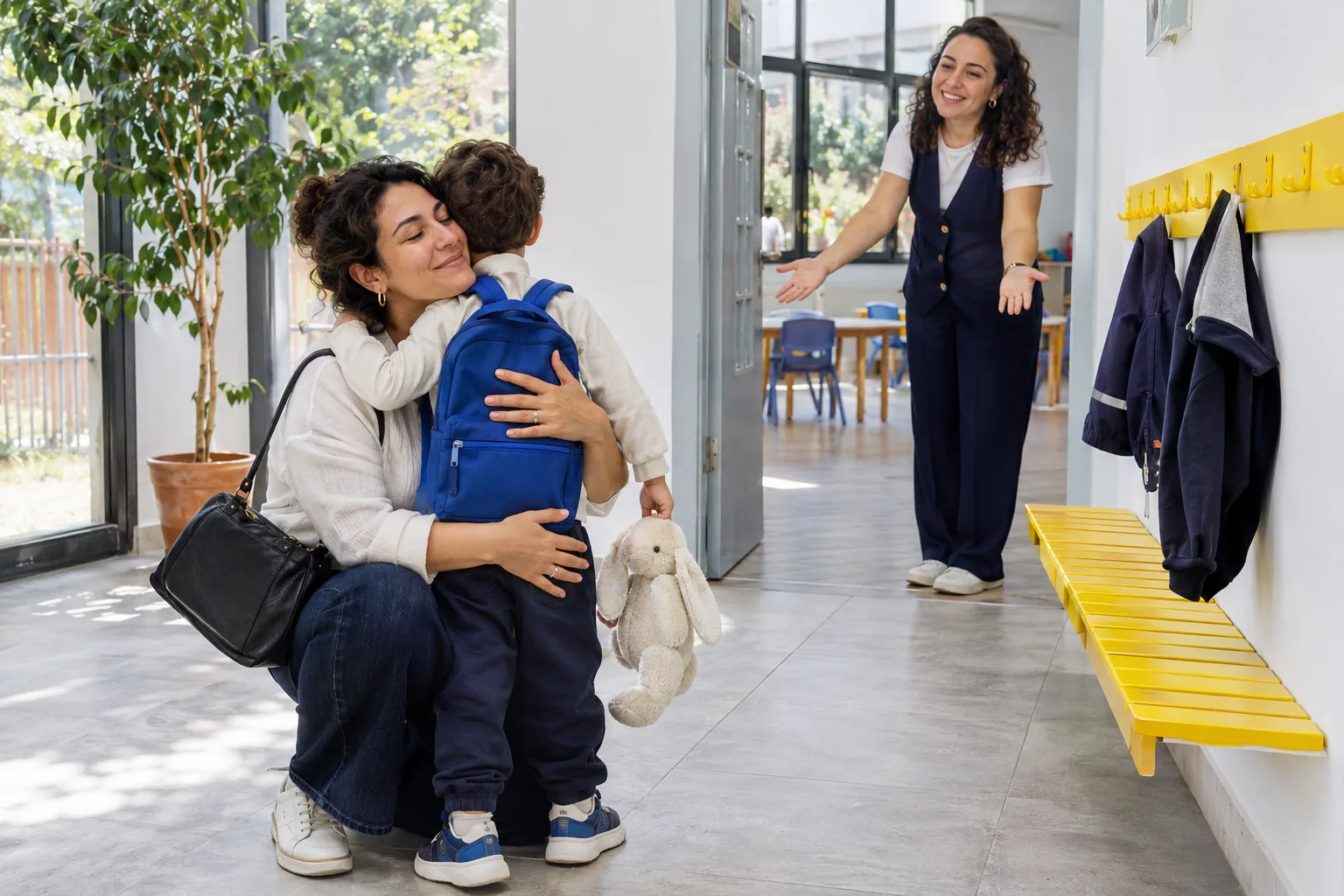
At Bilingo every class has two teachers, and each speaks only their own language with the children. When a language belongs to a person rather than a lesson, children work out by themselves who to speak which language with. This approach is known as "one person, one language". Nobody corrects a child for mixing.
Sources: Byers-Heinlein, K. & Lew-Williams, C. (2013), "Bilingualism in the Early Years: What the Science Says", LEARNing Landscapes 7(1); Genesee, F. (2009), "Early childhood bilingualism: Perils and possibilities", Journal of Applied Research on Learning; American Speech-Language-Hearing Association (ASHA), "Learning Two Languages".