Settling in: what happens in the first two weeks, and what you can do as a parent
Tears at the door, grumpy evenings, tummy aches in the morning… The first two weeks at preschool are often a bumpy ride. Here is how we plan the settling-in weeks and what you can do at home.
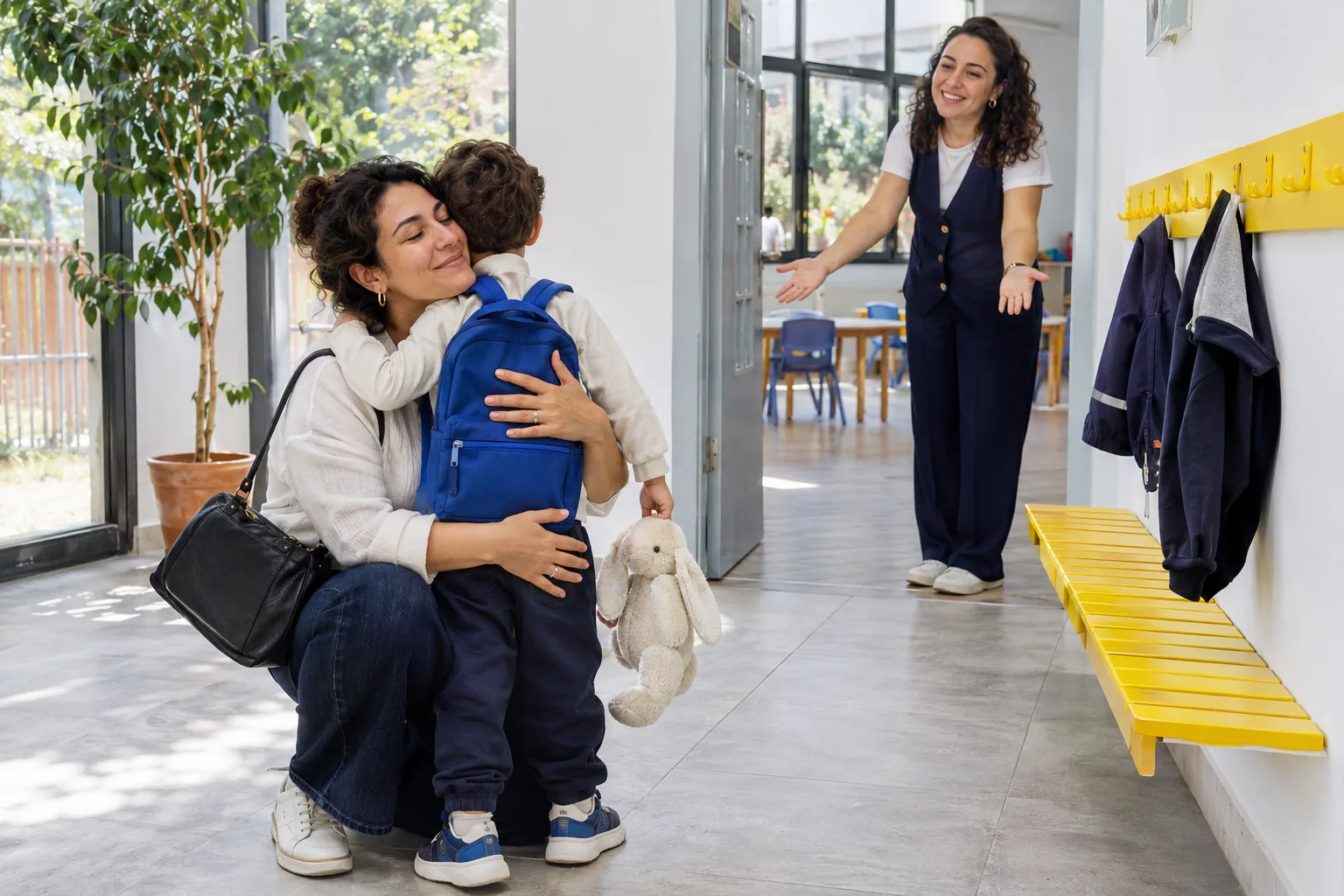
For most three-year-olds, starting preschool is the first real separation from home. A new place, new adults, new rules and lots of new children. So in the first weeks it is very common to see tears at the door, grumpiness in the evening, trouble falling asleep or "I am not going to school". Separation anxiety is a sign that your child is attached to you; it is not a problem but a stage to get through.
How do we plan the settling-in weeks?
At Bilingo we set aside the first two weeks as "settling-in weeks". The aim is for your child to get to know school while you are close by, and for the separation to grow in small steps.
- First two days: One hour, with the parent in the room. You sit in a corner while your child explores the toys, teachers and other children next to you.
- Days three and four: Two hours. The parent leaves the classroom but stays in the building, and makes a concrete promise: "I will be in the garden; I will come back after breakfast."
- Second week: Until lunch, then including nap time. Goodbyes happen at the door and are kept short.
This is not a fixed template. Some children wave at the door on day three and run inside; others need three weeks. We decide together with the class teacher, watching your child, when to take the next step.
Saying goodbye: short, clear and the same every day
What helps most during settling in is predictability. Children worry less when they know what will happen.
- Don't slip away. Disappearing unnoticed makes that moment easier, but it makes children cling harder at the door the next morning. Always say goodbye.
- Keep it short. A hug, a kiss, one sentence: "I will pick you up after lunch." Then leave. Long goodbyes at the door tell a child that staying might not be safe.
- Make a ritual. The same words, the same wave, the same look through the window every day. A small ritual helps a child feel in control of the separation.
- Come back when you said you would. Being on time in the first weeks builds your child's trust in you and in school faster than anything else.
Most children who cry at the door are playing five minutes later. We let you know with a message every day, so you can rest easy.
What can you do at home?
- Talk about school, but don't oversell it. Instead of "you will have so much fun", say concrete things: "There is a garden, you will eat lunch with your friends, Elif will meet you at the door."
- Adjust sleep and breakfast times in advance. A week before school starts, move wake-up time to the school routine. A tired child copes less well with separation.
- Give them something from home. A handkerchief, a small toy or a family photo can stay in their bag as "a piece of home".
- Don't fire questions in the evening. "What did you do today?" often gets no answer at three. Tell them something short from your own day instead; children usually join in.
- Expect some steps back. Toilet accidents, trouble falling asleep or wanting more cuddles are common during settling in and usually pass within a few weeks.
Is settling in different at a bilingual school?
The question parents ask most is: "My child doesn't speak English; won't they feel alone?" That is why during the settling-in weeks the first bond is usually made by the Turkish teacher. The native English teacher is in the room from day one and speaks only English, but never expects an English answer. Children get to know her first through songs, gestures and games. Within a few weeks most children work out by themselves which teacher they speak which language with.
When should you worry?
How long settling in takes varies from child to child. Still, if after four to six weeks your child is very distressed every morning, their appetite and sleep are clearly disturbed, or they do not join in play at all at school, let's talk with the teachers. We will make a plan together and, if needed, suggest support from a child development specialist.
Sources: American Academy of Pediatrics, HealthyChildren.org, "Separation Anxiety" and "Preparing Your Child for Preschool"; Turkish Ministry of National Education Preschool Education Programme (2024), settling-in section.